Physical Pharmaceutics 1 - Unit 1
Syllabus
Solubility of drugs:
Solubility expressions, mechanisms of solute solvent interactions, ideal solubility parameters, solvation & association, quantitative approach to the factors influencing solubility of drugs, diffusion principles in biological systems. Solubility of gas in liquids, solubility of liquids in liquids, (Binary solutions, ideal solutions) Raoult’s law, real solutions. Partiallymiscible liquids, Critical solution temperature and applications. Distribution law, its limitations and applications
Scroll to Download
PHYSICAL PHAMRACEUTICS-I UNIT-Ist
Solubility of Drugs
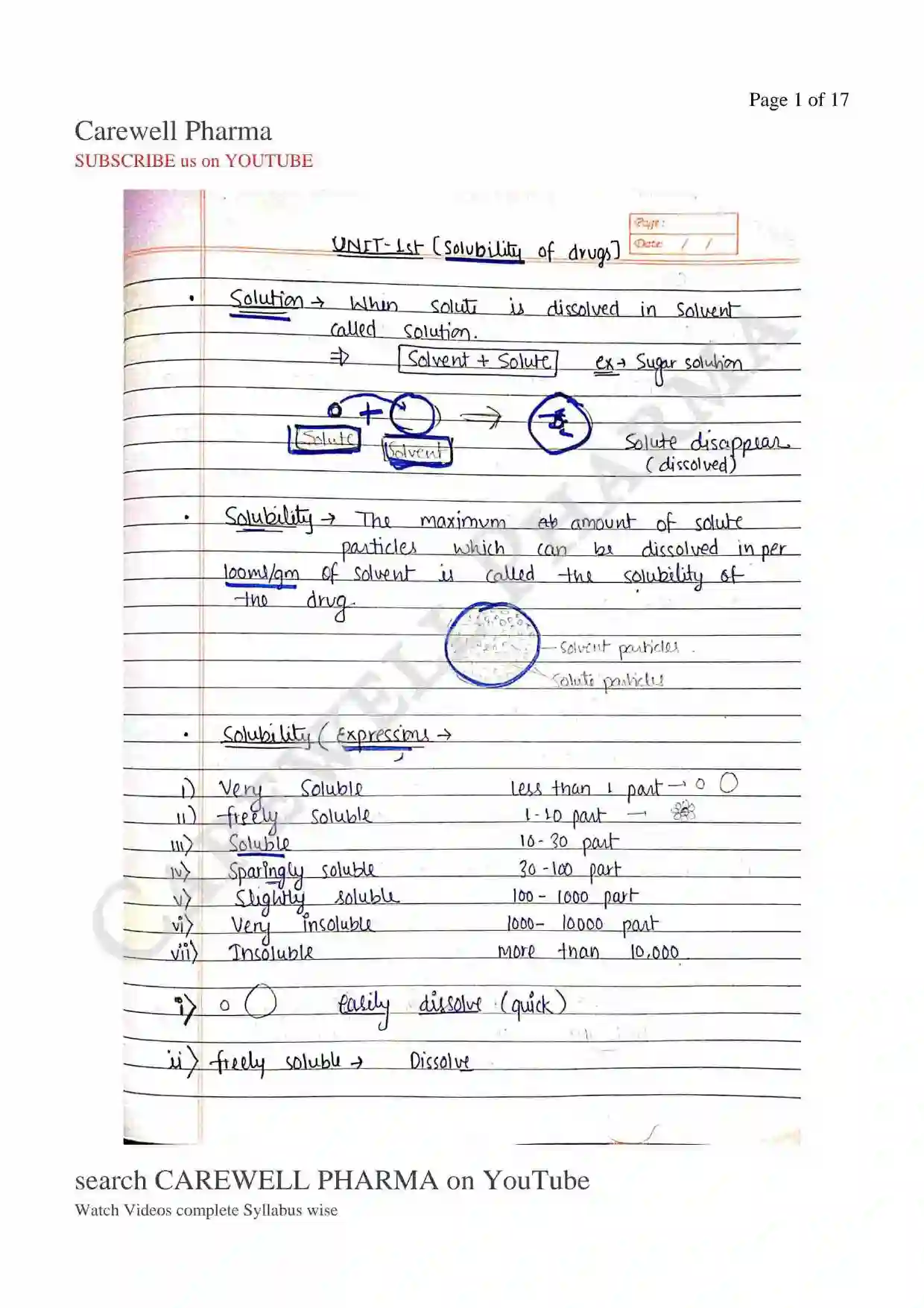
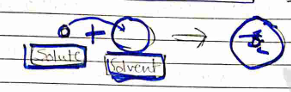
Solution → When Solute is dissolved in Solvent Called solution. $\Rightarrow$ Solvent + Solute
Ex → Sugar solution
Solubility → The maximum amount of solute which can be dissolved in per 100ml/gm of solvent is called the solubility of The drug particles.
Solubility Expressions
| 1) | Very Soluble | Less than 1 part |
| 11) | freely soluble | 1-10 part |
| 111) | Soluble | 10-30 part |
| iv) | Sparingly soluble | 30-100 part |
| v) | Slightly soluble | 100-1000 part |
| vi) | Very insoluble | 1000-10000 part |
| vii) | Insoluble | more than 10,000 |
Solute Particles
i) Easily dissolve (quick)
ii) Freely soluble → Dissolve by stirring.
iii) Soluble → Dissolve or mix by stirring.
iv) Sparingly soluble → Dissolved on heating.
v) Slightly soluble → Dissolved on heating by stirring.
vi) Very insoluble → On maximum effords very less amount of solute dissolved.
vii) Insoluble → Solute particles does not dissolved.
Types of Solution
- Saturated Solution
- Unsaturated Solution
- Supersaturated Solution
Saturated Solutions → At normal temp. maximum amount of solute dissolved in solvent in normal condition.
Unsaturated Solution → Condition in which we can easily add more solute to solvent.
Super Saturated Solution → It is a condition when solute not dissolved easily after that we can heat or by applying pressure that is called Super saturated.

Mechanism of Solute Solvent Interactions
When favourable interaction takes place b/w solute and solvent then solute git dissolved in solvent.
It involves three step
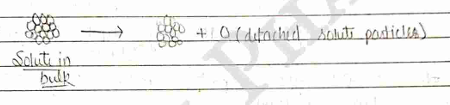
i) Detachement of solute from bulk form.
- Formation of vacant site in solvent.
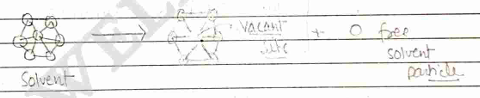
iii) Insertion of detached solute particle into solvent
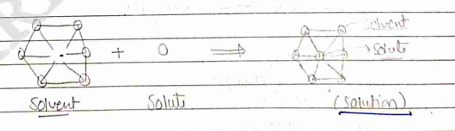
Mechanism for Different Solvents
- Polar Solvents Dielectric constant which reduces force of attraction.
- Ability of breaking covalent bond
- formation of Hydrogen bond...
Ex Water, ethanol.
- Non-Polar Solvents Non-polar solvents dissolve only non-polar solutes by induced dipole interactions.
Ex fats, oils etc-
iii) Semi-Polar Solvents Semi-polar solvents dissolve only non-polar / Semi-polar solutes by dipole moment.
Ex Acetone etc
So, All these parts follow "Like Dissolves Like" method. So, Solute-solvent Interaction Solubility
Ideal Solubility Parameters-
Solubility
cohesive energy
Volume
Enthalpy
Raydverg constant
Temperature
Volume
Solvation
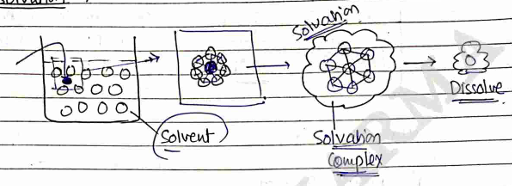
It describes that the interaction of solvent with dissolved molecules. in which Solvation complex formed.
So, it is the just before condition from dissolve. It involves Bond formation, hydrogen bonding, and van der Waals forces.
- It involves bond formation, hydrogen bonding, and vonder waals forces.
Solvent Aqueous ($H_2O) $\rightarrow Hydration Non-aqueous [other than H_2O$] ex- alcohol etc- $\rightarrow Solvation
Solvation Solute + Solvent
Association →
When solute particles dissociates, so ionic particles mix with the solvent particles undergoes into solvation process then process is Association. So, Solvation of ionic solute is known as association.
Three types
- Fully Solvated
- Solvent Shared
- Contacted
i) Fully Solvated
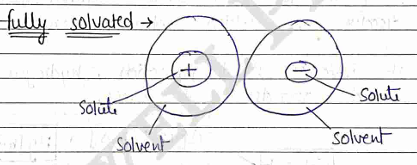
- Different particles of solvents cover anionic and cationic particles of solutes separately.
ii) Solvent Shared
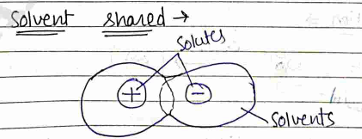
- When Solvents and solvent are attached with each other and Shared one part and then cover the Solutes.
iii) Contacted
- It is works on strong electrolytes.
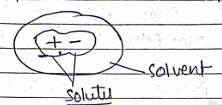
- In This Solutes ions contact with each other or contact then Solvent cover Solutes. So, firstly share ion with each other.
FACTOR AFFECTING SOLUBILITY
Those factor which affect (or alter) the solubility of Solution.
Solubility of
- Solid in Liquid
- Gas in Liquid
- Liquid in Liquid
1) Solid in Liquid When Solute is in solid form and solvent is in liquid form and then Solid dissolve on Liquid.
- Factors
Nature → If nature is same, then solubility is good.
Ex Polar Solute in Polar solvent = good Non-Polar Solute in Non-Polar Solvent etc-Surface Area → If surface area is more, solubility increase.
Temperature → When we dissolve solid into liquid, two reaction Occured
i) Exothermic Heat Release for dissolve. ex POP in water.
Solubility (Exothermic)
ii) Endothermic absorb heat for dissolve. ex Sugar in Water.
Solubility (Endothermic)
2) Gas in Liquid
When Solute is in Gas form and Solvent is in Liquid form.
- Nature not affect this, because Gas is not polar, non polar etc.
- Factors
i) Surface area → Directly proportional to Solubility
ii) Temp → Temp (Gas escapes).
iii) Pressure → Pressure Solubility. Henry's law
3) Liquid in Liquid
When both Solute & solvent is in Liquid form.
- Factors
i) Nature → "Like dissolve Like" method
ii) Temperature → Temp Solubility.
iii) Pressure → Pressure Solubility.
iv) Surface Area → S.A Solubility.
Binary Solution
When we mixed solute in solvent mixture, then the solution formed is called binary Solution.
- Completely miscible [Alcohol + Water]
- Partially miscible (Phenol + Water)
- Immisible (oil + water)
Partially Miscible
These are those binary solution which mixed partially. And they make an Conjugated layer between us.
- But when we apply heat on it Conjugated layer disappeared slowly Slowly.
- And when these two soln completed mixed it Conjugated layer completely disappeared. is Called CST (Critical Solution temperature).
Ideal and Real (Non-ideal) Solution
- Ideal Solution → which follow all rule (perfect sol$^n$)
- Non-ideal Solution → Which does not follow all rule
- Roult's law
- Henry's law
- Dalton's law
- Charle's law
Dalton's law → Total Pressure of partially container (p-pressure)
Roult's law
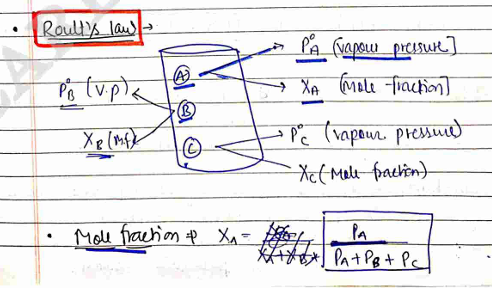
- Partial Pressure
Total pressure
Roult's law
- The solution which follow this law is Called Ideal Solution.
If,
Negative deviation.
Positive deviation.
Then, Solution is non-ideal or real solutions.
Applications
- Determind vapour pressure of components in a 2-component mixture solution.
- Boiling point of solution.
Limitation
- This applies only to very dilute solutions.
- This applies to solutions containing only a non-volatile solute.
- This does not apply to solutes that dissociate or associate within the particular solution.
Diffusion Principle in Biological System
Diffusion
It is a mass transfer process of individual molecules of a substance from a region of high concentration to low concentration. (under concentration gradient)
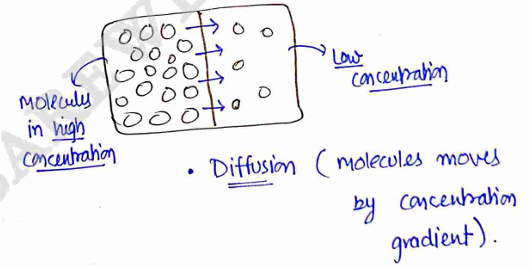
Fick's First Law of Diffusion
It states that the rate of diffusion of a solute molecules through a barrier is proportional to the concentration gradient.
Where,
flux of a component (Rate of diffusion)
amount transport
time taken.
Diffusion constant
Concentration gradient
Negative sign indicates that diffusion occurs in the direction opposite to that of high concentration. (High to low concn.)
Fick's Second Law of Diffusion
It states that, the change in concentration with respect to time, at a particular region is proportional to the change in concentration gradient at that point in the system.
Applications in Pharmaceutical Science
- Release of drugs from dosage form.
- Distribution of drugs.
- Prediction of absorption.
Distribution Law (Partition Coefficient)
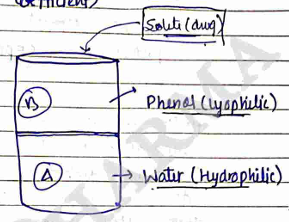
- It is used to find out the nature of Solute particle (unknown drug). ie drug is lyophilic or Hydrophilic..
How we used it?
Firstly take partially miscible binary solution, (Phenol + Water), then mix it into unknown drug into that binary solution, then mix it. Now, we have to check, On which solvent (phenol or Water), drug dissolve more.
Partition Coefficient
Where,
Drug dissolve in oil phase
Drug dissolve in water phase
Lyophilic $P < 1 =$ Hydrophilic
How we separate drug in oil phase & water phase ??.
SEPARATION METHOD
- Firstly put it into Separating funnel then add unknown drug, mix upto 15 min.
- Then stay it or put it for 30 min.
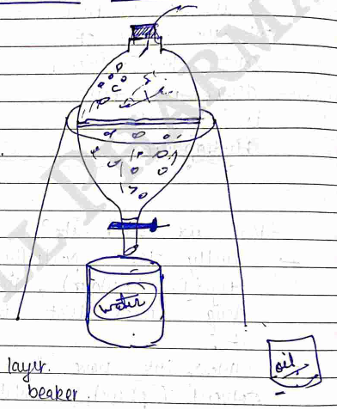
- Now, take one beaker put it in down of stand, weight for conjugate layer. then take another beaker.
- Now, take each sample's 5ml and check drug concentration in Spectroscopy.
- Now, put the value in partition coefficient formulas.
- if then Lyophilic or then hydrophilic.